What the Stride-Blend Index™ Actually Measures
Most sneaker shopping happens in the dark. You see a pair you like, you read a few reviews, you guess at your size, and you hope the shoe feels as good on mile five as it did in the first thirty seconds. We built the Stride-Blend Index™ because that guessing game wastes your time and money — and because we think a shoe company should be able to tell you, in plain numbers, what you’re buying.
Every Blendenza silhouette — from the Tropical Palm Sunset Low-Top to the Japanese Tiger Tattoo — is scored across three everyday performance metrics:
- Cushion Index: 9.4/10 — how much shock absorption and underfoot support you get, measured on a consistent scale.
- Breathable Canvas: 12 oz — the weight and weave of the upper, which determines airflow and how the shoe breaks in.
- Vulcanized Grip: 100% — the bonding method and outsole construction that keep the shoe planted on pavement, tile, and gravel.
These aren’t marketing adjectives. They’re measurements, taken the same way on every pair, so you can compare a high-top to a low-top and know exactly what changes. Here’s how each one works — and why it matters for the way you actually walk through a day.
The Cushion Index: Why 9.4/10 Is the Number We Care About Most
Cushioning is the metric people feel first and understand least. A shoe can feel soft in the store and turn punishing by lunchtime, or feel firm on day one and become your favorite by week two. The Cushion Index exists to separate softness from support.
How we measure it
We test the footbed and midsole as a system, not as separate parts. A calibrated load is applied across the heel and forefoot zones, and we record two things: peak compression (how much the material gives) and recovery rate (how quickly it returns to shape). A shoe that compresses deeply but recovers slowly feels dead underfoot after an hour. A shoe that barely compresses at all transmits every sidewalk seam straight into your arch.
The 9.4/10 score reflects a deliberate balance: enough give to absorb heel strikes on concrete, enough resilience to keep supporting you through a full day of errands, commutes, and standing around. We didn’t chase a perfect 10. A 10 would mean maximum softness, and maximum softness is a shoe that quits on you by 3 p.m.
What it means for your day
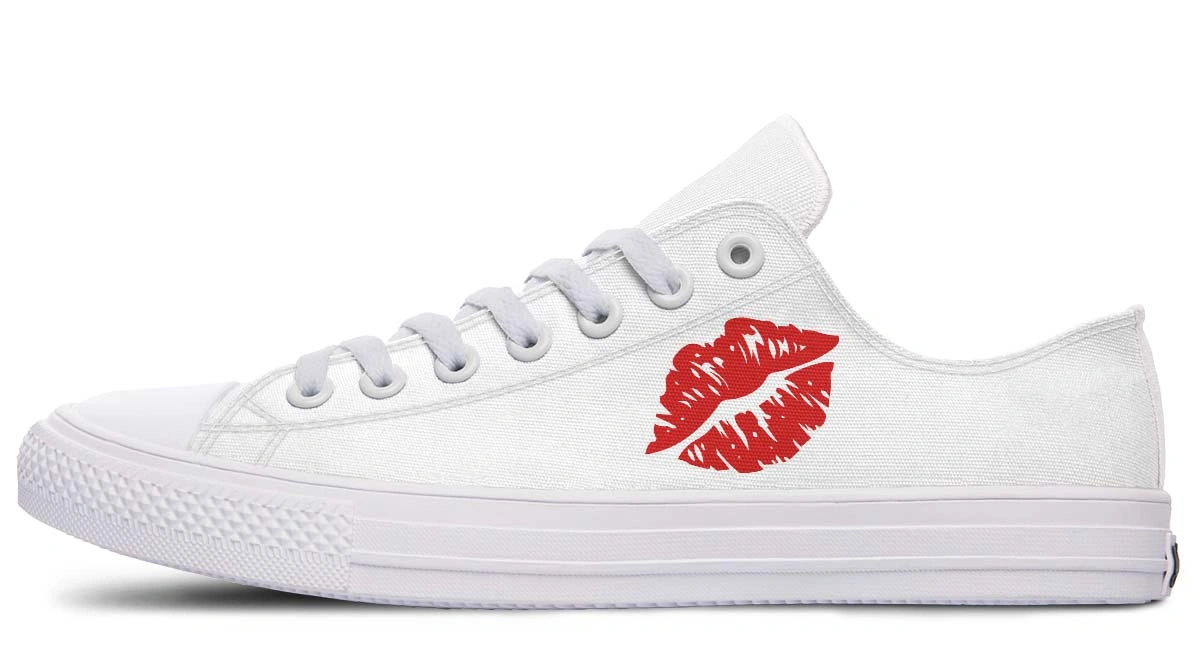
If you’re on your feet for work, chasing kids, or walking a city grid, the Cushion Index is your most important comparison point. It’s consistent across the line — the Kiss Mark White Low-Top and the Purple Sun Moon Yin Yang Canvas Low-Tops share the same 9.4 rating — so you can choose your pair based on style and height without sacrificing underfoot feel.
Flex Response: The Metric Hiding Inside the Cushion Index
Flex response is where cushioning and construction meet. A shoe can have a plush footbed and still fight your foot every time you push off, because the sole is too stiff to bend at the ball. We measure flex by tracking how the forefoot bends under a rolling load — essentially simulating a stride — and noting where the sole hinges and how much resistance it offers.
Canvas sneakers have an advantage here: the vulcanized construction we use creates a sole that flexes naturally at the forefoot without the creasing and cracking you get from stiffer cemented builds. That’s part of why the Cushion Index holds up over months rather than weeks. The shoe moves with your stride instead of asking your foot to adapt to it.
Practically speaking, good flex response means less fatigue in your calves and less heel slip as you walk. It’s the difference between a shoe you wear for a quick errand and one you wear all Saturday.
Breathable Canvas: What 12 oz Tells You
Canvas weight is one of the most useful — and most ignored — specs in footwear. We use a 12 oz canvas upper across the line, and that number is a genuine trade-off, not a boast.
Why 12 oz
Lighter canvas (8–10 oz) breathes well but stretches out of shape and wears through at the toe box faster. Heavier canvas (14 oz and up) is durable but runs warm and takes weeks to soften. Twelve ounces sits in the working middle: dense enough to hold its structure and hold a printed graphic cleanly, porous enough that air moves through on a warm afternoon.
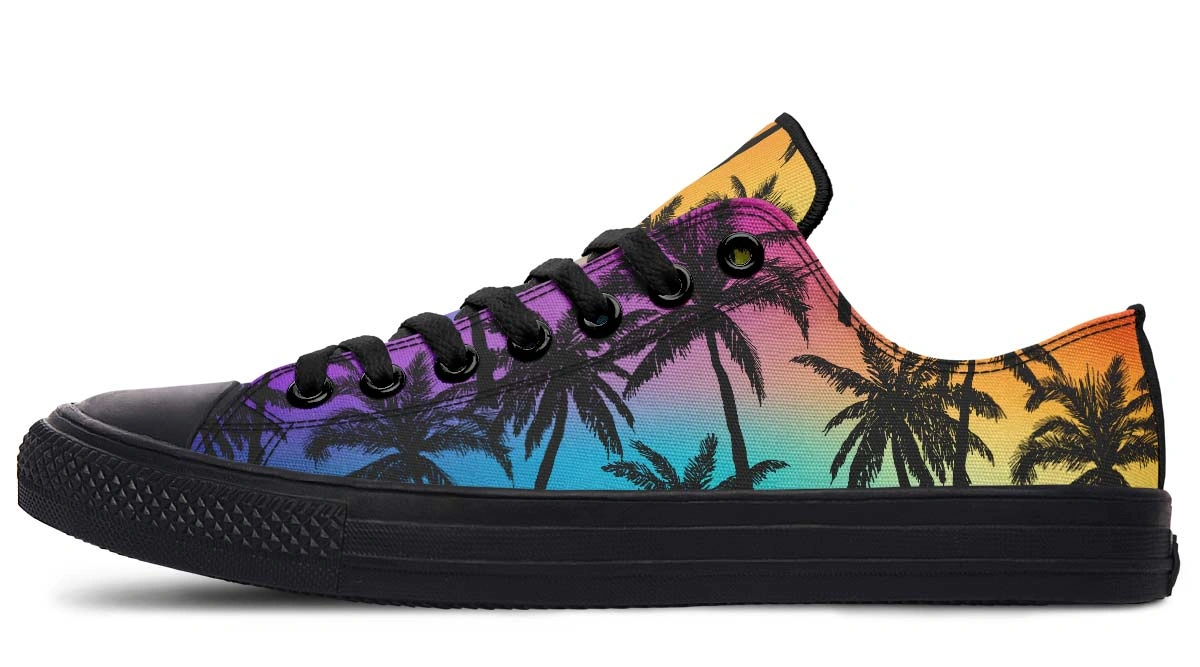
That matters for printed sneakers specifically. A print needs a stable surface to stay crisp. The Cute Seamless Pattern Low-Top and the Orange Eye Graphic Low-Top both rely on that 12 oz weave to keep their detail sharp through wear and washing.
Break-in and care
A 12 oz canvas upper typically softens within a few wears and molds to the shape of your foot. Spot-clean with cool water and a soft brush, air-dry away from direct heat, and the upper will hold its fit far longer than a lighter alternative.
Vulcanized Grip: Why We Rate It 100%
Vulcanization is the process of bonding the canvas upper to the rubber outsole under heat and pressure, creating a single integrated unit rather than two parts glued together. It’s an older method than modern cement construction, and for canvas sneakers it’s still the better one — the bond is stronger, the sole flexes more naturally, and the shoe holds its shape through repeated wear.
Our 100% rating means every pair in the line uses full vulcanized construction. No partial bonding, no shortcuts on the high-tops. The outsole pattern is tuned for everyday surfaces — pavement, tile, gym floors, packed gravel — with enough tread depth to grip without collecting debris.
What this means for you: fewer separation failures at the toe and heel, a sole that stays attached through the flex cycle, and predictable traction on wet sidewalks. It’s the least glamorous metric in the Index and the one most likely to determine whether a pair lasts a season or three years.
How to Compare Shoes Using the Index
The Index is built for side-by-side comparison. Here’s how to use it in practice.
Start with your primary use
If you’re standing or walking most of the day, lead with the Cushion Index — all Blendenza pairs score 9.4, so you’re choosing on style and height from a position of equal comfort. If you run warm or wear shoes sockless in summer, the 12 oz canvas spec tells you what to expect for airflow. If you’re hard on soles — long commutes, uneven pavement — the 100% vulcanized rating is your durability baseline.
Then choose your silhouette and print
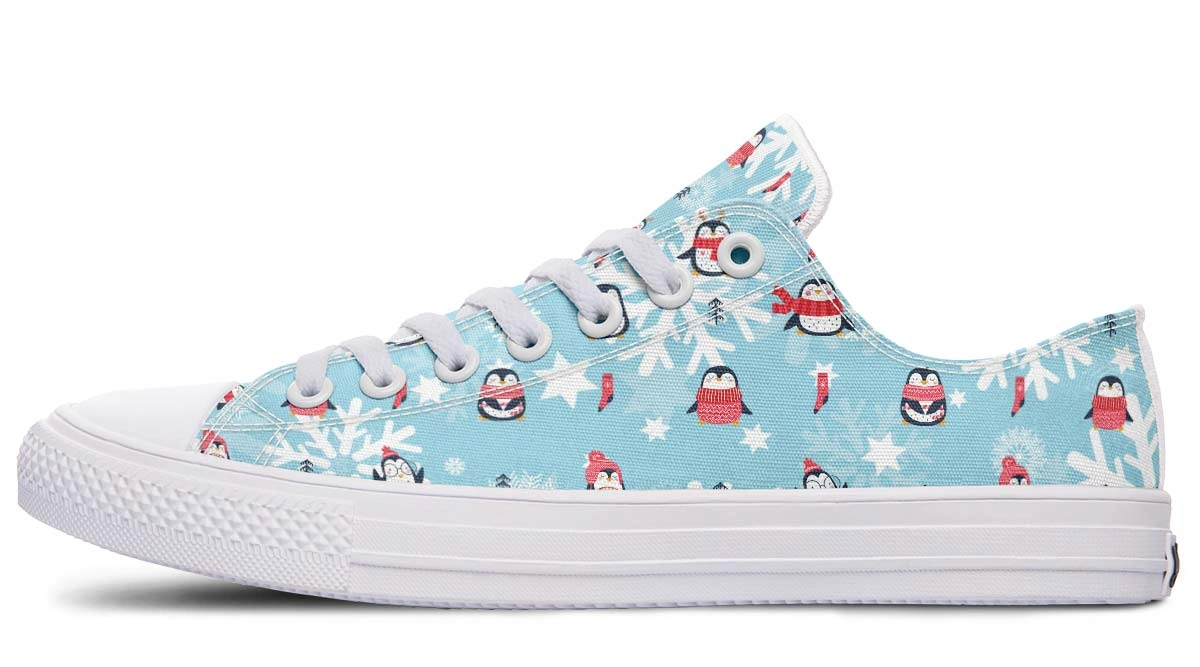
Because the three metrics are consistent across the line, the real decision comes down to fit, height, and design. Low-tops like the Beauty and Muscle Graphic Low-Top and the Cartoon Fit Rhino Low-Top suit warm weather and easy on-off. High-tops offer more ankle coverage for cooler months. Prints range from the Japanese Tiger Tattoo Low-Top to the Butterfly and Roses White Low-Top — same engine underneath, different personality on top.
Check the practical details
All Blendenza sneakers come in US sizes 5–14 and run around $140–$150. Every order ships free within the U.S., with 2–3 business day handling and 6–9 business day delivery. If the fit isn’t right, our 30-day easy returns policy covers you — details on the Shipping Policy page.
The Stride-Blend Index isn’t a scoreboard. It’s a promise that the numbers on the page match the shoe on your foot.
Why We Publish the Numbers
Blendenza is built on four values: clarity, craft, movement, and honest service. The Index is clarity in practice. We’re a small operation out of Harrisonville, Missouri, and we’d rather tell you exactly what a 12 oz canvas upper means than dress it up in adjectives. You can read more about how we work on our About Us page.
The next time you’re comparing two pairs — say the Push Yourself Motto Low-Top against the Orange Eye Graphic Low-Top — you’ll have three real numbers to work with instead of a hunch. That’s the whole point.
Ready to Find Your Pair?
Every silhouette in the collection carries the same Stride-Blend Index™ foundation: 9.4 Cushion Index, 12 oz breathable canvas, and 100% vulcanized grip. The only variable left is you — your size, your style, your stride.
Shop the full Blendenza collection and pick the print that fits your everyday. Free U.S. shipping, 30-day easy returns, and a pair built to move with you.