
What Actually Happens Under Your Foot With Every Step
Here’s a number worth sitting with: the average person takes somewhere between 5,000 and 7,000 steps a day, and each one sends a force roughly 1.5 to 2.5 times your body weight up through your heel. For a 160-pound adult, that’s a small crowd’s worth of pressure landing on a few square inches of foam, thousands of times, day after day. The material under your foot is doing quiet, constant work — and most sneakers treat it as an afterthought.
At Blendenza, we build printed canvas sneakers in Harrisonville, Missouri, and we’ve spent a lot of time thinking about that thin slice of foam between you and the pavement. The result is a dual-density EVA footbed, and this article is the honest, no-hype explanation of how it works, why it matters, and how it compares to the single-density insoles you’ve probably worn without noticing.
EVA Foam, Explained Without the Jargon
EVA stands for ethylene-vinyl acetate — a closed-cell copolymer foam that’s become the workhorse of modern footwear. It’s lightweight, water-resistant, and, most importantly, tunable. By adjusting how much gas gets whipped into the polymer during manufacturing, engineers control its density: how much it compresses under load, how quickly it springs back, and how much shock it absorbs.
Density Is the Whole Story
Think of EVA density as a dial between two extremes:
- Low-density EVA is soft and plush. It compresses easily, cradles the foot, and feels wonderful in the first minute of wear. But it bottoms out under sustained load and loses its rebound over time.
- High-density EVA is firmer and more resilient. It resists compression, holds its shape, and provides structural support — but on its own, it can feel unforgiving under a hard heel strike.
A single-density footbed forces you to pick one. A dual-density footbed refuses to choose, and that’s the entire premise behind our design.
How a Dual-Density Footbed Is Built
Our footbed pairs two layers of EVA with distinct jobs, bonded into one unit:
The Top Layer: Soft, Contoured Cushion
The upper layer is a lower-density EVA with a memory-foam character. It contours to the shape of your foot within the first few wears, distributing pressure across the whole plantar surface rather than concentrating it at the heel and ball. This is the layer you feel — the immediate softness that makes a fresh pair feel broken-in on day one.
The Base Layer: Firm, Resilient Support
Beneath it sits a higher-density EVA base. This is the structural backbone. It prevents the soft top layer from collapsing under your weight, keeps the footbed’s shape intact over hundreds of miles, and spreads impact forces laterally instead of letting them punch straight through to the ground. It’s also what keeps the cushioning from “packing out” — the slow flattening that turns a once-comfortable insole into a flat slab.
The two layers work as a system. The soft layer absorbs; the firm layer distributes and rebounds. Neither could do the job alone.
Heel Strike Absorption: Where Fatigue Actually Begins
Walking gait begins with a heel strike, and that’s the highest-force moment of the entire cycle. The impact travels up through the heel, into the ankle, and onward through the kinetic chain. A footbed that absorbs that spike well doesn’t just feel better in the moment — it reduces the cumulative micro-stress that shows up later as tired arches, achy knees, and that end-of-day heaviness in your legs.
The dual-density structure handles this in stages. The soft top layer deforms on contact, taking the initial edge off the impact. The firm base layer then decelerates the load and returns a portion of the energy as you roll forward into your stride. The result is a smoother force curve rather than a sharp spike — and over thousands of steps, that difference compounds.
Dual-Density vs. Single-Density: The Honest Comparison
Single-density insoles aren’t inherently bad — plenty of sneakers use them, and they’re cheap to produce. But they come with trade-offs you feel over time:
- Soft single-density: Comfortable at first, but compresses and flattens within weeks of regular wear. Support fades, and the footbed stops doing its job.
- Firm single-density: Durable and supportive, but transmits more impact directly to your heel and arch. Fine for short walks, less kind over a full day on your feet.
- Dual-density: Soft where you need cushioning, firm where you need structure. The soft layer can’t collapse because the firm layer holds it up; the firm layer doesn’t feel harsh because the soft layer buffers it.
In practice, dual-density construction is what lets a canvas sneaker stay comfortable through a long day without turning into a flat, tired slab by month three. It’s the difference between a footbed that works on day one and one that still works on day three hundred.
How This Fits Into the Stride-Blend Index™
Every Blendenza silhouette is rated on our Stride-Blend Index™, a three-part measure of everyday performance. The dual-density EVA footbed is the foundation of the Cushion Index (9.4/10) — the score reflects both the immediate softness of the top layer and the sustained support of the base. The Breathable Canvas (12 oz) upper keeps airflow moving so the footbed isn’t trapping heat, and the Vulcanized Grip (100%) outsole anchors the whole system to the ground with a bond that won’t separate.
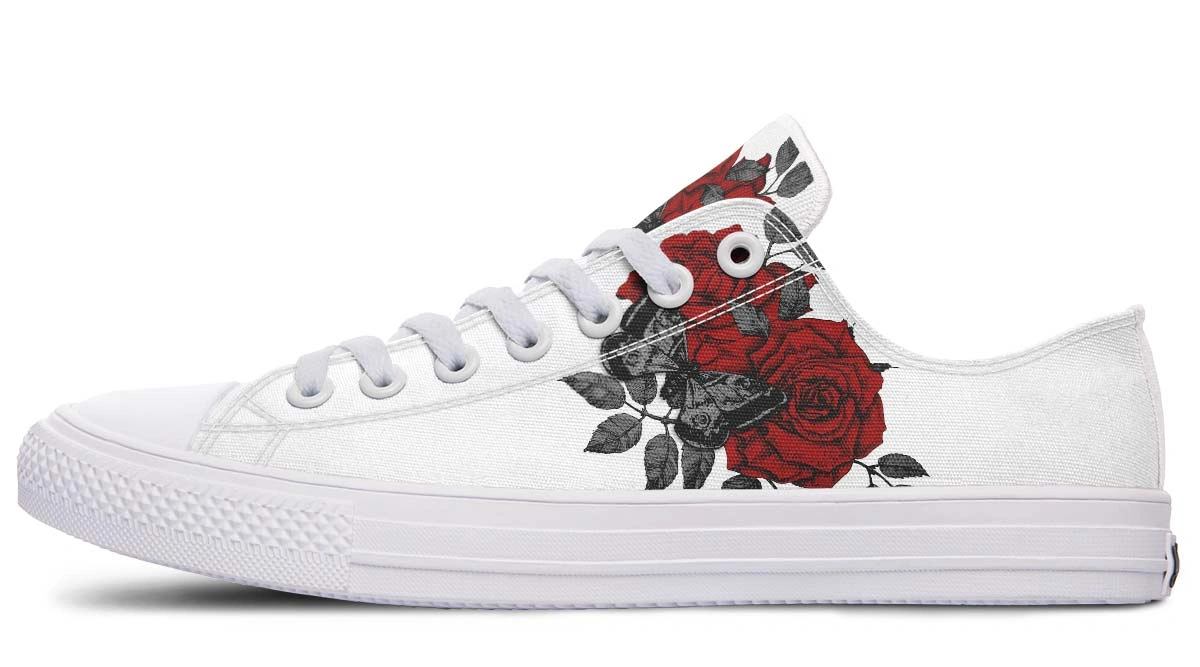
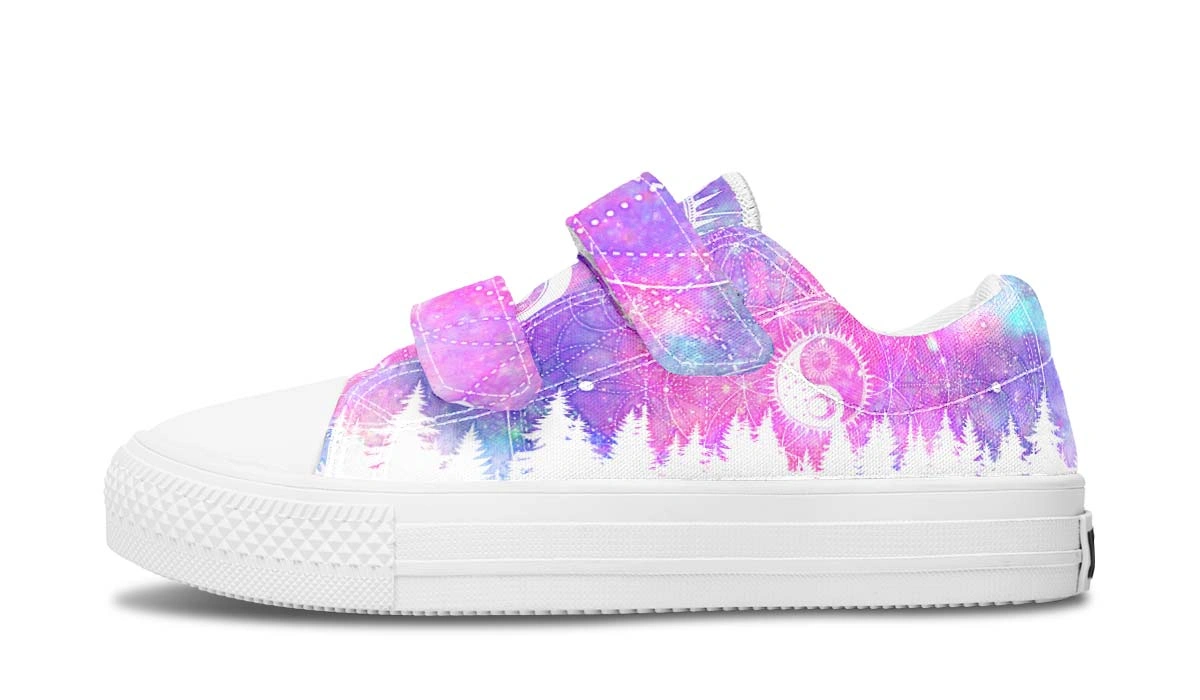
You can see the same engineering across the entire line — from the Tropical Palm Sunset Low-Tops to the Kiss Mark White Low-Tops, the Cute Seamless Pattern Low-Tops, the Orange Eye Graphic Low-Tops, the Beauty and Muscle Graphic Low-Tops, the Japanese Tiger Tattoo Low-Tops, the Cartoon Fit Rhino Low-Tops, the Push Yourself Motto Low-Tops, and the Purple Sun Moon Yin Yang Canvas Low-Tops. The artwork changes; the footbed doesn’t.
Why Fatigue Prevention Is a Materials Problem
Foot fatigue rarely comes from one dramatic event. It accumulates — a slightly too-firm heel strike here, a footbed that’s lost its shape there, a lack of lateral force distribution on uneven pavement. Dual-density EVA attacks all three at once. The soft layer cushions the strike, the firm layer spreads the load and holds its geometry, and the bonded construction keeps the two working together instead of delaminating or shifting.
That’s the quiet science behind a sneaker you can wear all day and forget about. It’s not magic; it’s two foams with different jobs, doing them well.
Ready to Feel the Difference?
If you’ve been living with single-density insoles that flatten out by mid-season, the dual-density footbed is the upgrade you’ll notice on your very first walk. Browse the full collection — Low-Tops and High-Tops, sizes US 5–14, priced around $140–$150 — and find the print that fits your stride.
Shop the Blendenza Collection →
Every order ships free within the U.S., with 2–3 business day handling and 6–9 business day delivery. Not the right fit? Our Shipping Policy and 30-day easy returns have you covered. Curious about how we build? Read more About Us — or just lace up and go.