
Every step you take on pavement sends a small shockwave through your shoe. What happens at that exact point of contact — the outsole — determines whether your sneakers feel stable and grippy or slippery and worn within months. The construction method behind that outsole matters more than most people realize. Two methods dominate footwear manufacturing today: vulcanized rubber and cemented construction. They look similar on a shelf, but they behave very differently once they meet wet asphalt, concrete, and the daily grind of city walking.
At Blendenza, we build every silhouette with vulcanized rubber outsoles. It’s not a marketing flourish — it’s an engineering decision rooted in durability and grip. Here’s a clear, technical look at why vulcanized outsoles outperform cemented soles on city streets, and what that means for your daily stride.
What Is Vulcanization, Exactly?
Vulcanization is a chemical process that transforms raw rubber into a tougher, more elastic material. Natural rubber on its own is sticky, temperature-sensitive, and wears down quickly. During vulcanization, rubber is heated with sulfur (and often other accelerators) to roughly 140–160°C. This creates cross-links between the polymer chains — molecular bridges that lock the rubber into a stable, resilient structure.
The result is a material that resists abrasion, holds its shape under pressure, and maintains grip across a wider temperature range. Charles Goodyear discovered the process in 1839, and it’s still the gold standard for performance rubber nearly two centuries later.
How Vulcanized Outsoles Are Bonded
In vulcanized construction, the rubber outsole is bonded to the upper through heat and pressure — often in a single curing step. The rubber isn’t just glued on; it’s fused. The bond becomes part of the material itself, creating a unified structure that resists separation at the flex point.
Cemented Construction: The Glue-Based Alternative
Cemented construction is the most common method in modern footwear. The upper is stitched to a midsole, and the outsole is attached using contact cement — an adhesive applied to both surfaces, allowed to become tacky, then pressed together.
It’s efficient and allows for a wide range of materials. But the bond is only as strong as the adhesive layer. Over time, heat, moisture, and repeated flexing can cause that layer to degrade. You’ve likely seen the result: soles peeling at the toe or heel after a season of heavy wear.
Where Cemented Soles Fall Short on Pavement
- Adhesive fatigue: Contact cement weakens with repeated flexing and temperature swings — common on hot summer sidewalks and cold winter streets.
- Moisture vulnerability: Water seeps into the bond line, accelerating separation.
- Thinner rubber: Cemented outsoles are often thinner to keep weight down, which means faster wear-through at high-abrasion zones like the heel and ball of the foot.
- Less consistent grip: Without the cross-linked rubber structure, cemented outsoles tend to harden and lose traction as they age.
Why Vulcanized Rubber Grips Better on Wet and Dry Surfaces
Grip comes down to how rubber interacts with the ground at a microscopic level. Vulcanized rubber maintains a higher coefficient of friction because its cross-linked structure stays pliable without becoming soft and gummy. It conforms to surface texture — the aggregate in concrete, the smooth face of wet tile — and creates more contact area.
Cemented outsoles often use rubber compounds with fillers to reduce cost. These compounds harden faster and lose their tack. On wet pavement, that translates to a measurable difference in stopping distance and lateral stability.
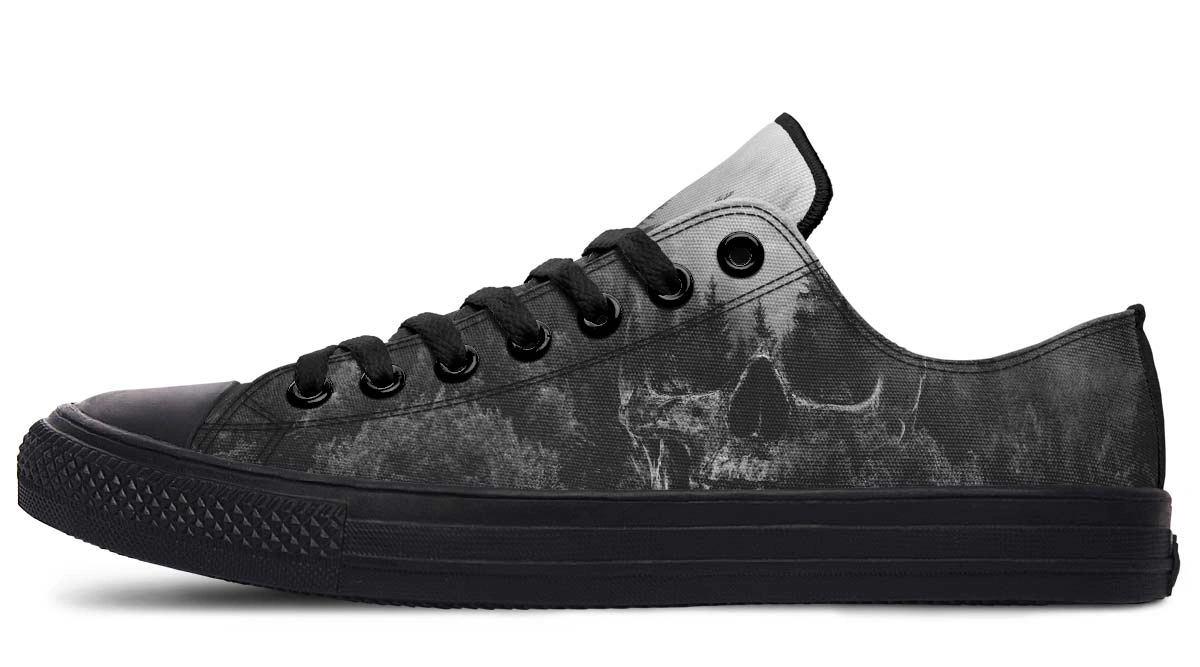
Blendenza rates every silhouette on our Vulcanized Grip metric at 100% — meaning the entire outsole is vulcanized rubber, not a partial application or a cemented rubber veneer. Combined with a Cushion Index of 9.4/10 and a 12 oz breathable canvas upper, the Stride-Blend Index™ gives you a clear picture of how each shoe performs before you ever lace up.
Longevity: The Real Cost-Per-Mile Difference
A shoe’s lifespan is usually decided at the outsole. Vulcanized rubber resists abrasion far better than cemented alternatives because the cross-linked molecular structure distributes wear more evenly. Instead of a thin layer wearing through at the heel, the rubber gradually buffs down while maintaining structural integrity.
In practical terms, a vulcanized outsole on a daily-worn canvas sneaker can outlast a cemented equivalent by a significant margin — often the difference between replacing shoes every season versus every few years. That’s the kind of value that matters when you’re logging 5,000 to 10,000 steps a day on city streets.
Flex and Recovery
Vulcanized rubber also recovers its shape after compression. That means the outsole doesn’t flatten permanently under your body weight. Cemented outsoles, especially those with thinner rubber, tend to develop compressed zones that reduce cushioning and alter your gait over time.
Vulcanized Construction in the Blendenza Lineup
Every Blendenza canvas sneaker — from the Tropical Palm Sunset Low-Top Canvas Sneakers to the Purple Sun Moon Yin Yang Canvas Low-Tops — is built on a vulcanized rubber outsole. The construction is consistent across the collection, so you get the same grip and durability whether you choose a bold graphic or a minimal print.
Consider the Kiss Mark White Low-Top Canvas Sneakers or the Japanese Tiger Tattoo Low-Top Canvas Sneakers: both pair a 12 oz breathable canvas upper with a vulcanized outsole that holds its edge through rain, heat, and daily pavement pounding. The Push Yourself Motto Low-Top Canvas Sneakers and Beauty and Muscle Graphic Low-Top Canvas Sneakers carry the same engineering underfoot.
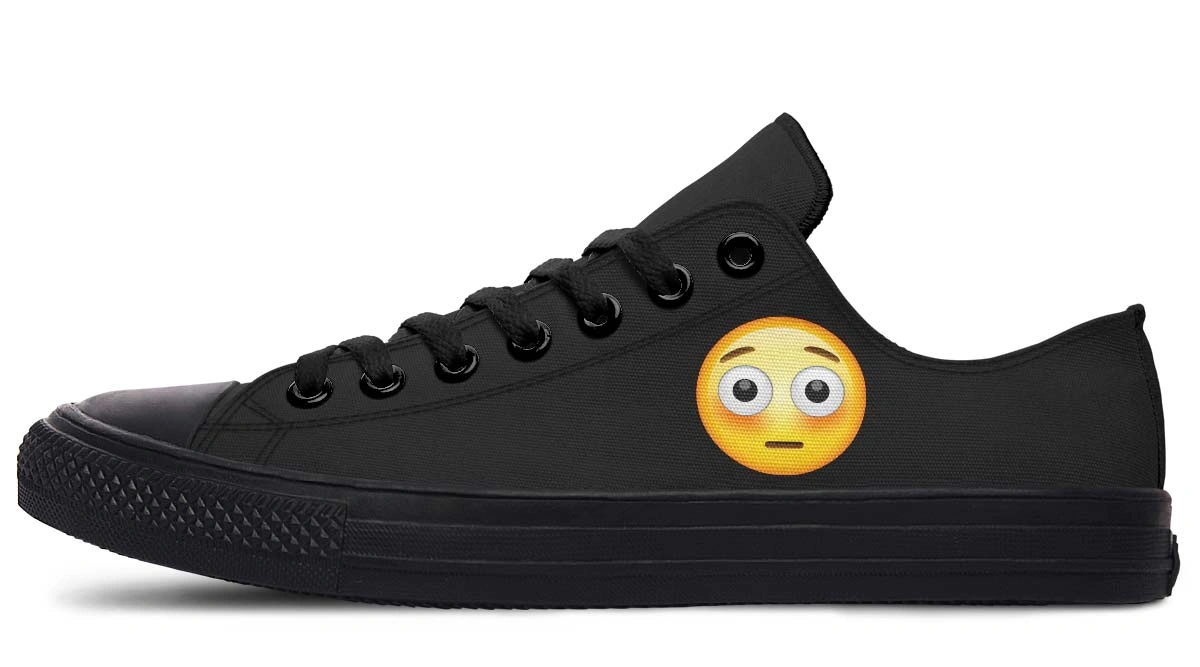
If you prefer a more expressive print, the Cute Seamless Pattern Low-Top Canvas Sneakers, Orange Eye Graphic Low-Top Canvas Sneakers, and Butterfly and Roses White Low-Top Canvas Sneakers all share the same vulcanized foundation. Even the Cartoon Fit Rhino Low-Top Canvas Sneakers — as lighthearted as they look — are built to handle wet sidewalks and long city blocks without slipping.
What to Look for When You Shop
Not every brand labels its construction method clearly. Here’s how to tell vulcanized from cemented when you’re evaluating a pair:
- Look at the bond line: Vulcanized outsoles often show a smooth, fused edge. Cemented soles may show a visible adhesive seam or slight gap.
- Check the flex point: Bend the shoe at the ball of the foot. Vulcanized rubber flexes as one unit; cemented soles may crease sharply or show separation.
- Ask about the rubber: Brands that use vulcanized construction are usually proud of it and will say so. Blendenza lists Vulcanized Grip as a core metric for a reason.
- Weigh the shoe: Cemented outsoles are often thinner and lighter, but that comes at the cost of durability.
The Bottom Line for City Walkers
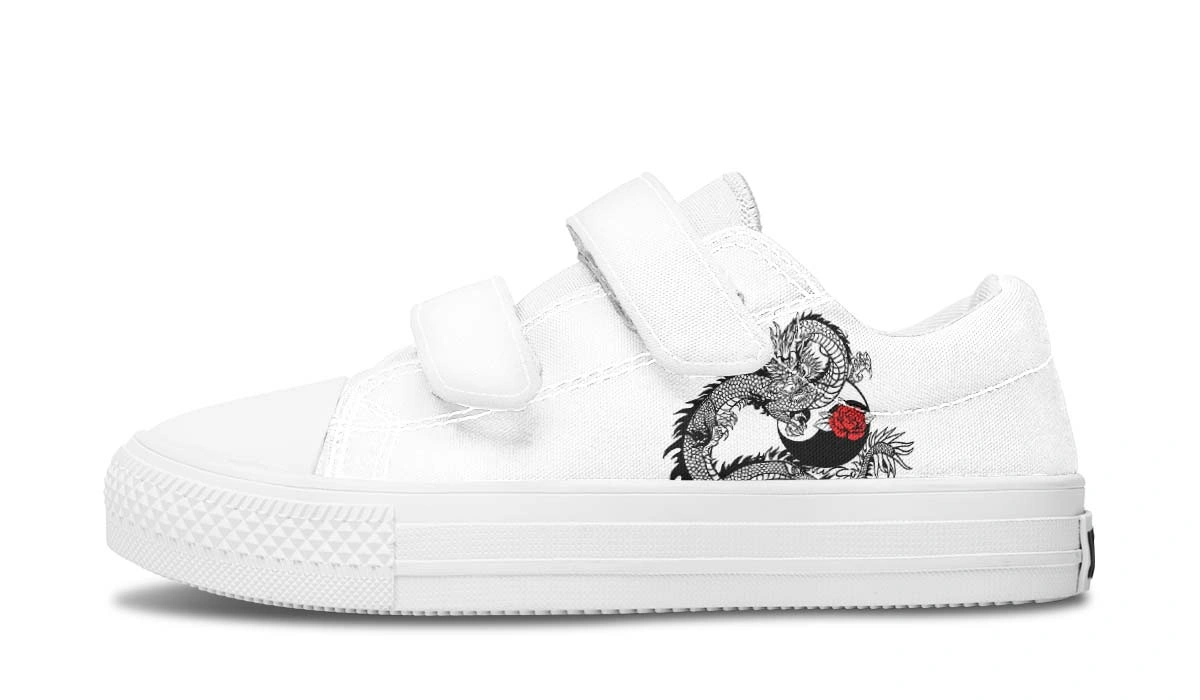
City streets are unforgiving. They’re hot in summer, wet in spring, and salted in winter. A cemented sole might survive a season of light wear, but a vulcanized rubber outsole is engineered to keep its grip and structure through years of daily use. The difference isn’t cosmetic — it’s chemical, structural, and measurable in every step.
At Blendenza, we build for movement and craft. That means choosing the construction method that holds up when you’re crossing a rain-slicked intersection, hustling to a train, or simply walking the long way home. Vulcanized rubber isn’t the cheapest way to make a sneaker. It’s the right way for the streets you actually walk.
Curious about the full lineup? Learn more about our approach, check our shipping policy for delivery details, or browse the collection to find your next pair.
Ready to Step Into Better Grip?
Every Blendenza silhouette — from the Cartoon Unicorn Canvas Low-Top Sneakers to the Japanese Tiger Tattoo Low-Tops — is built with vulcanized rubber outsoles, a 9.4/10 Cushion Index, and 12 oz breathable canvas. Sizes run US 5–14, with free standard U.S. shipping on every order, 2–3 business day handling, 6–9 business day delivery, and 30-day easy returns.
Shop the Blendenza Collection →
Find the pair that matches your stride. Your feet will notice the difference on the very first block.